Surface Velocity Radar
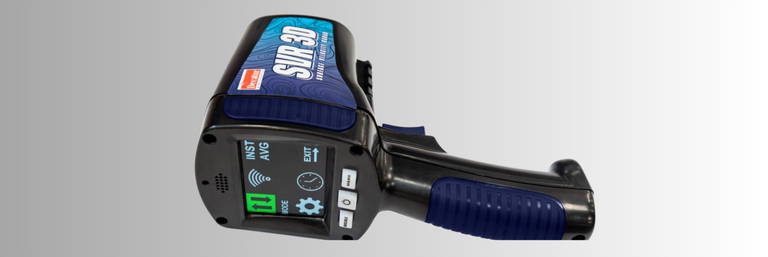
The Portable 3D Surface Velocity Radar (SVR) is a handheld, non-contact device designed to measure water surface velocity with high accuracy and speed. Using advanced Doppler radar technology, it provides instantaneous 3D velocity measurements, making it ideal for rivers, streams, flood monitoring, and environmental research. Lightweight and rugged, the SVR ensures safe and reliable field operation in a variety of conditions.
Key Features
- • Handheld & Portable: Lightweight design for easy transport and field use.
- • Non-Contact Measurement: Measures water velocity without entering the water, enhancing safety.
- • 3D Velocity Measurement: Instantaneous readings with automatic tilt compensation for vertical and horizontal angles.
- • Color Display & Data Logging: Real-time velocity display and storage for thousands of readings.
- • Long Battery Life: Provides more than 25 hours of operation per charge.
- • Rugged Design: Resistant to drops, rain, and harsh environmental conditions.
- • Easy Mounting Options: Compatible with tripods or other field supports.
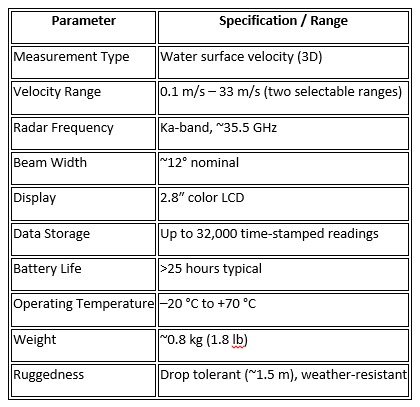
Typical Specifications
Application
- • Flood and stormwater monitoring
>
- • River and stream discharge estimation
- • Environmental and hydrology research
- • Irrigation and water resources management
- • Temporary field surveys and rapid measurements
Benefits to Users
- • Safe: Non-contact measurements reduce risk in fast-flowing water.
- • Accurate: Advanced 3D Doppler technology delivers reliable, real-time velocity data.
- • Portable: Handheld design allows easy deployment in remote or temporary field locations.
- • Efficient: Quick measurements save time during surveys or flood monitoring.
- • Durable: Designed for long-term field use in harsh conditions.
Best Practices / Considerations
- • Ensure the device is held steadily to minimize angle-related measurement errors.
- • Use tilt compensation for accurate vertical and horizontal velocity readings.
- • Avoid smooth water surfaces with no particles or ripples, which may reduce radar return signals.
- • Store and backup data regularly to prevent loss.
- • Charge the battery fully before extended field sessions and carry spare power if needed.
- • When estimating discharge, correlate measurements with cross-section geometry for best results.



 CALL US
 WHATSAPP
 LOCATION